Lionfish Ocean Watercolor Clipart Bundle: Illustrations Review
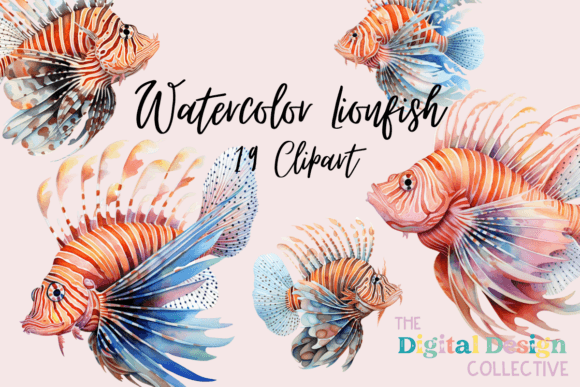
When evaluating a new graphic design asset for a client project, my first question is always about emotional resonance. Technical specs matter, but does the art actually feel like something? Upon opening the Lionfish Ocean Watercolor Clipart Bundle, the immediate impression is one of fluid, organic elegance. These are not stiff, vector-traced cartoons; they possess the genuine bleed and bloom of traditional watercolor media digitized with high fidelity. For a designer, this distinction is critical. The mood is distinctly tropical yet sophisticated, avoiding the juvenile aesthetic that often plagues marine-themed assets. It suggests a brand identity rooted in nature, conservation, or luxury coastal living rather than generic beachwear.
Elevating Coastal Brand Identity and Packaging Design
I recently consulted on a rebrand for a boutique skincare line specializing in ocean-derived ingredients. The client needed marketing visuals that communicated purity and marine biology without looking clinical. This is where the Lionfish Ocean Watercolor Clipart Bundle proved its worth in a real-world scenario. We utilized the lionfish elements as secondary brand marks on product labels and outer packaging. Because the illustrations have soft edges and translucent layers, they integrated seamlessly with matte paper textures and embossed typography. In packaging design, hard-edged clipart often looks pasted on, but these watercolors felt printed directly into the substrate. For small business branding, this level of polish establishes immediate visual trust and perceived value, distinguishing a handmade business from mass-market competitors.
Performance Across Print-on-Demand and Digital Products
Versatility is the metric by which any design bundle must be judged. I tested these assets across multiple mediums to see if they held up outside of packaging. For print-on-demand sellers creating t-shirt design or tote bags, the color saturation is rich enough to survive DTG printing without washing out, provided the file resolution is respected. As a sublimation design, the watercolor gradients translate beautifully onto polyester fabrics, creating a vintage, artistic look that sells well on platforms like Etsy. On the digital front, these assets serve as excellent anchors for social media graphics. When designing Instagram carousels or Pinterest pins for a travel blog or marine education account, the lionfish acts as a directional cue or decorative border that maintains engagement without overwhelming the copy. They also function exceptionally well within a Canva template, allowing non-designers to drag and drop professional-grade art into their own web design or promotional materials.
Strategic Placement: Where These Illustrations Shine
Understanding where to place a creative design element is just as important as the element itself. The Lionfish Ocean Watercolor Clipart Bundle performs best when given room to breathe. These assets excel in large layout areas such as website hero sections, poster backgrounds, or the front cover of editorial publications. They are ideal for product mockup overlays where you want to suggest an environment without using a photograph. For sticker design and Cricut users, the intricate fin details offer satisfying cutting lines, though users should ensure their blade is sharp for the finer watercolor splatters. In editorial design, such as brochures for aquariums or coastal resorts, these illustrations provide necessary whitespace relief, breaking up dense text blocks with organic shapes that guide the eye naturally through the content hierarchy.
Navigating Visual Hierarchy and Readability Challenges
However, no asset is without limitations. Designers must exercise caution when integrating these design assets into complex layouts. Watercolor, by definition, lacks hard boundaries. If placed behind small body text or detailed data tables, the varying opacity can severely impact readability. I advise against using these as background textures for heavy information design unless a solid overlay is applied. Furthermore, while beautiful, the lionfish motif is visually busy. It should not compete with a complex logo design or intricate typographic lockups. In minimalist corporate branding or tech-focused projects, this style may feel too whimsical or unstructured. Always prioritize visual hierarchy; if the illustration distracts from the primary call to action or brand message, it is being misused regardless of its artistic merit.
Technical Due Diligence for Commercial Application
Before committing this digital product to a paid client deliverable, rigorous technical testing is non-negotiable. First, verify the commercial license. Ensure the terms cover your specific use case, whether that is physical products, digital templates, or NFT creation. Next, inspect the PNG transparency. Some watercolor scans retain white backgrounds or gray halos that require manual masking. Clean edges are essential for professional commercial design. Test the assets in black and white to ensure the values hold up for single-color printing or accessibility compliance. Check contrast against both light and dark backgrounds; watercolors can disappear on white or turn muddy on black. Finally, pair the art with appropriate typography. A refined serif or clean sans-serif usually complements organic watercolor better than a distressed font, which can make the overall composition feel cluttered. Confirming SVG editability is also wise if you anticipate needing to recolor elements for different seasonal campaigns or brand variations.
Final Verdict for Designers and Creators
The Lionfish Ocean Watercolor Clipart Bundle represents a high-value resource for specific niches. It is not a universal solution for every modern design challenge, but for projects requiring aquatic authenticity, artistic warmth, and organic texture, it delivers. Whether you are building a brand identity for a marine biologist, designing Etsy product listings for ocean lovers, or crafting educational materials, this collection provides a cohesive visual language that feels curated rather than generic. By respecting the medium's characteristics and applying thoughtful placement strategies, designers can leverage these illustrations to create work that resonates emotionally and performs commercially. Just remember to validate your files and license before hitting export, ensuring your creative vision translates flawlessly from screen to final product.