Watercolor Hand Drawn House Clipart Review
As a professional embroidery designer and product reviewer, I approach every new digital asset with a specific question: will this actually stitch out beautifully on real fabric? When evaluating the Watercolor Hand Drawn House Clipart for potential use in commercial and personal projects, my assessment goes far beyond the screen. While these illustrations are visually charming in their digital format, translating that soft, artistic aesthetic into a tangible embroidered patch or custom apparel requires careful technical consideration. This review breaks down how this specific artwork performs when moved from a digital file to the embroidery hoop, focusing on practical application for makers, Etsy sellers, and small business owners.
First Impressions and Artistic Translation
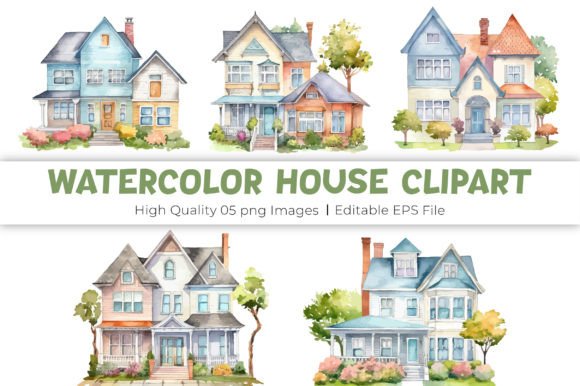
My initial reaction to the Watercolor Hand Drawn House Clipart is that it evokes a distinct sense of nostalgia and warmth. The hand-drawn quality suggests imperfection and humanity, which is exactly what buyers seek in a handmade product. However, watercolor effects rely on transparency and blending, two things that thread cannot naturally replicate. As an illustrator, the artist has captured a mood, but as an embroiderer, I immediately see the challenge of stitch density. The design feels best suited for items where a whimsical, cottage-core aesthetic is desired rather than photorealism. It naturally belongs on unstructured fabrics like linen tea towels, canvas tote bags, or nursery decor where the organic lines complement the material's texture.
Real-World Application: The Custom Tote Bag Test
To truly evaluate this asset, I mentally placed it onto a natural cotton canvas tote bag intended for a boutique holiday collection. In this scenario, the Watercolor Hand Drawn House Clipart serves as the centerpiece of a personalized gift or seasonal merchandise. For a tote bag design, the artwork needs to hold its own against the coarse weave of the canvas. The hand-drawn lines would likely translate well into running stitch outlines, providing definition without excessive bulk. However, the watercolor fill areas require strategic digitizing. Instead of heavy satin stitch blocks that might distort the bag, I would recommend using light fill stitches or cross-hatching to mimic the painterly effect while maintaining the structural integrity of the fabric.
This specific use case highlights the versatility of the illustration. Whether you are creating sweatshirt embroidery for a fall launch or baby embroidery for a gender-neutral nursery line, the house motif offers broad appeal. For Etsy sellers, this type of imagery bridges the gap between trendy and timeless, making it a safer investment for inventory than hyper-specific fads. The key is ensuring the final embroidered patch or direct-to-garment stitch-out retains the delicate nature of the original drawing without becoming a dense, bulletproof vest on the chest.
Navigating Fabric Limitations and Hoop Sizes
While the Watercolor Hand Drawn House Clipart is versatile, it demands respect for fabric physics. I advise extreme caution when applying this design to stretchy knits or performance wear without significant modification. The intricate details inherent in hand-drawn architecture can easily get lost or cause puckering on unstable fabrics. If you plan to use this for custom apparel like t-shirts, you must verify the stabilizer choice and potentially simplify the design elements to reduce stitch count and tension issues.
Hoop size is another critical factor. Detailed illustrations often suffer when scaled down too small. Before purchasing or digitizing, check the minimum recommended dimensions. Tiny lettering or fine window panes in the house design may not register clearly in a 4x4 hoop. Conversely, scaling up for large pillow covers requires checking if the line weight remains proportional. Dark fabrics also present a challenge; watercolor art relies on light passing through layers. On black or navy garments, you will need to lay down a white underlay base, which changes the hand-feel of the garment significantly. Always test on scrap fabric first to ensure the visual personality survives the transition to thread.
Enhancing Product Value and Customer Trust
Using high-quality illustrations like Watercolor Hand Drawn House Clipart directly impacts perceived value. Customers associate detailed, cohesive art with professionalism. A sloppy digitization of a beautiful drawing damages brand consistency and buyer engagement. When the embroidery file is optimized correctly, the result is a premium finished product that justifies a higher price point. For creative entrepreneurs selling digital embroidery files or physical goods, clarity is currency. The design should look intentional, not accidental.
Furthermore, this style of artwork enhances giftability. A personalized gift featuring a stylized home resonates emotionally, making it ideal for wedding gifts, closing gifts for realtors, or holiday embroidery. The human touch of the hand-drawn line communicates care that stock vector art cannot match. When presenting these items online, printable mockups should accurately reflect the stitched texture to manage customer expectations. Honest representation builds trust and reduces returns, especially for small shop products where reputation is everything.
Essential Technical Notes for Makers
Before integrating Watercolor Hand Drawn House Clipart into your production workflow, adhere to these practical guidelines to ensure success:
- Verify Licensing: Confirm whether the license permits commercial embroidery, digital resale, or only personal use. Never assume rights for selling finished products or design assets without explicit permission.
- Test Stitch Density: Watercolor styles can become overly dense. Run a test sew-out to check for fabric distortion and adjust pull compensation accordingly.
- Thread Color Contrast: Select thread colors that capture the essence of the watercolor palette without requiring twenty different shades. Blending similar tones creates depth more effectively than constant color changes.
- Stabilizer Selection: Match your stabilizer to the fabric weight. Use cut-away for knits and tear-away for stable wovens to prevent the detailed running stitch from pulling.
- Mockup Accuracy: Create realistic previews that show stitch direction and texture. Avoid flat digital overlays that mislead buyers about the tactile nature of the embroidered patch or applique design.
- Detail Inspection: Zoom in to identify elements that are too small to stitch. Remove or enlarge tiny accents that will turn into thread nests on the machine.
- Fabric Texture Compatibility: Remember that highly textured fabrics like terry cloth or fleece will obscure fine lines. Consider adding a topping or simplifying the design for such materials.
Final Verdict for Creative Entrepreneurs
The Watercolor Hand Drawn House Clipart represents a valuable asset for those willing to treat it as a starting point rather than a finished solution. Its strength lies in its emotional resonance and adaptability across various categories, from nursery decor to boutique branding. However, its successful execution depends entirely on the maker's understanding of embroidery mechanics. By respecting the limitations of thread and fabric, and by conducting thorough testing, you can transform these lovely illustrations into profitable, professional-grade merchandise. For the discerning crafter or business owner, this design offers a pathway to creating unique, heartfelt items that stand out in a saturated market, provided the technical foundation is solid.