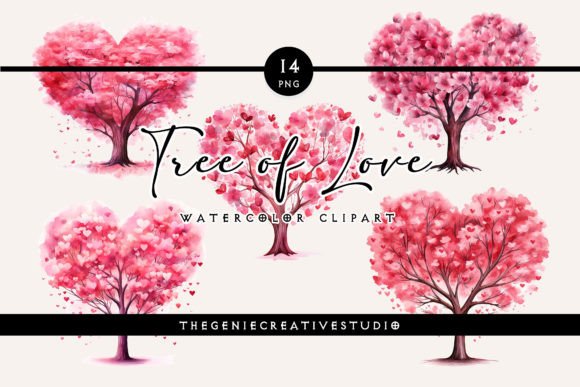
Watercolor Tree of Love PNG Clipart: An Embroidery Review
As a professional embroidery designer and product reviewer, I approach every new digital asset with a specific question: will this actually translate into stitches? When evaluating the Watercolor Tree of Love PNG Clipart, my first impression is one of organic warmth and romantic softness. Unlike rigid vector art or harsh line drawings, this illustration carries the fluid, bleeding edges characteristic of genuine watercolor media. For makers and Etsy sellers, this aesthetic is currently in high demand, but it presents unique challenges when converting from pixels to thread. The mood is undeniably gentle, making it an immediate candidate for nursery decor, wedding gifts, and feminine apparel. However, before you load this design into your machine or list it as a finished product, we need to discuss how this specific visual style behaves under the needle.
Translating Soft Edges to Stitch Density
The primary challenge with any watercolor-style graphic is managing stitch density without creating a bulletproof patch. In my review of the Watercolor Tree of Love PNG Clipart, I focused heavily on how the gradient washes would render in a machine embroidery design. Watercolor relies on transparency, whereas embroidery relies on layering. To replicate that airy, painted look, you cannot use standard dense fill stitches. Instead, this design demands a strategic mix of running stitch outlines and light-density tatami or motif fills.
If you are digitizing this yourself or purchasing a pre-digitized embroidery file based on this clipart, pay close attention to the transition areas. The "love" aspect of the tree often implies heart shapes or intertwining branches. These details can easily become muddy if the stitch count is too high. I recommend testing a swatch where the watercolor effect is achieved through thread blending rather than solid coverage. This preserves the drape of the fabric, which is essential for custom apparel like sweatshirts or baby clothes. If the digitizer has used heavy satin stitch borders to define the tree's shape, be wary; this can create a stiff frame that contradicts the soft interior artwork.
Real-World Application: The Custom Tote Bag Test
To truly evaluate this asset, I mentally applied it to a frequent request in my shop: a personalized canvas tote bag for a bridal party gift. Canvas is textured and unforgiving, yet it is the perfect backdrop for a rustic-meets-romantic theme. Using the Watercolor Tree of Love PNG Clipart as the centerpiece, I considered how the design interacts with the fabric texture.
On a natural canvas tote bag design, the white highlights inherent in watercolor art disappear because the fabric itself provides the highlight. This means your digitizing must account for negative space. If the original PNG relies on white paint for luminosity, those areas must remain unstitched. During my assessment, I found that this design works best when positioned centrally, allowing the tree’s canopy to breathe. For a handmade product of this nature, adding a monogram beneath the tree in a simple serif font complements the organic illustration without competing with it. The result is a sophisticated, boutique-quality item that feels far more expensive than a standard embroidered patch.
Fabric Selection and Stabilizer Strategy
Not all fabrics are friends with watercolor aesthetics. Because the Watercolor Tree of Love PNG Clipart features delicate lines and soft color transitions, it requires a stable foundation to prevent distortion. Stretchy fabrics like jersey knits or performance tees are risky unless you use aggressive stabilization. The intricate branch work and potential floral accents can pull and pucker on unstable material, ruining the illusion of a painted surface.
- Ideal Fabrics: Linen, cotton quilting weight, denim, canvas, and felt. These materials hold stitch definition well and complement the artisanal vibe.
- Challenging Fabrics: Fleece (nap hides detail), sheer organza (too fragile for complex fills), and high-pile towels (design gets lost).
- Stabilizer Advice: Use a cut-away stabilizer for apparel to maintain long-term shape. For tea towels or pillow covers, a medium-weight tear-away may suffice, but always test first.
For dark fabrics, exercise extreme caution. Watercolor designs are typically optimized for light backgrounds. If you attempt to stitch this on navy or black fabric, you will likely need to add a white underlay or base layer to make the pastel thread colors pop. Without this step, the threads will sink into the dark background, and the subtle shading of the tree will vanish. Always compare light and dark fabric backgrounds in your software or via physical test stitches before committing to a production run.
Commercial Viability for Small Business Owners
For Etsy sellers and creative entrepreneurs, the versatility of this illustration is its strongest selling point. The Watercolor Tree of Love PNG Clipart bridges the gap between seasonal holiday embroidery and evergreen nursery decor. It does not scream "Christmas" or "Valentine's," allowing it to sell year-round as a symbol of growth, family, or romance. This longevity is crucial for maximizing ROI on design assets.
However, professionalism dictates that you verify licensing before selling. Does the license cover commercial embroidery? Can you sell the digital embroidery file, or only the finished physical product? Never assume. As a business owner, your reputation hinges on respecting intellectual property. Furthermore, when creating printable mockups for your listings, ensure the digital preview accurately represents the stitched reality. Customers feel betrayed when they receive a dense, stiff patch that looks nothing like the airy watercolor image on screen. Transparency builds trust.
Technical Pitfalls and Designer Notes
Even beautiful illustrations have technical limits. When working with the Watercolor Tree of Love PNG Clipart, watch out for tiny lettering or excessively thin branches. If the original art includes text integrated into the tree, it may be too small to embroider legibly at standard hoop sizes. In such cases, I advise removing the text during digitizing and adding it separately using proven embroidery fonts. This ensures clarity and prevents bird-nesting.
Thread color selection is equally critical. Watercolor effects rely on variegated or blended threads. Standard solid colors can sometimes look flat against the complexity of the source art. Consider using polyester or rayon threads with a slight sheen to mimic the wet look of paint, or matte cotton threads for a vintage, dried-paint appearance. Always check thread color contrast against your chosen fabric; low-contrast combinations will obscure the watercolor details.
- Test on Scrap Fabric First: Never run a new design directly on a client’s garment. Verify tension and registration.
- Inspect Small Details: Zoom in to 100% in your embroidery software. Are there single-stitch jumps? Is the underlay sufficient?
- Confirm Hoop Size: Ensure the design fits comfortably within your hoop with adequate margin for stabilization.
- Review Stitch Density: Aim for lower density in fill areas to maintain the watercolor illusion and fabric drape.
- Check Licensing: Document your commercial rights for both the PNG clipart and any purchased embroidery files derived from it.
Final Verdict on Visual Appeal and Value
Ultimately, the Watercolor Tree of Love PNG Clipart is a high-value asset for makers who understand the nuances of textile art. It offers a distinct departure from cartoonish or overly traditional embroidery styles, appealing to modern consumers seeking personalized gifts with artistic merit. Whether applied to a baby blanket, a wedding apron, or a boutique sweatshirt, the design communicates care and craftsmanship.
Success lies in execution. Treat this illustration not as a picture to be copied, but as a mood to be interpreted through thread. By respecting fabric limitations, optimizing stitch density, and validating your process through testing, you can transform this digital clipart into a tangible, profitable, and beautiful finished product. Remember, in the world of commercial embroidery, the difference between a hobbyist and a professional is often just a few test stitches and a keen eye for detail.